If you’re thinking about building a mobile app in 2026, you’re not alone. The market is growing fast, and a good app can open doors that a website simply can’t. But let’s be honest the process can feel overwhelming if you’ve never done it before. That’s why I put together this guide.
I’ve worked with Hivenexis for years, helping businesses across the USA, UK, and Europe turn rough ideas into apps people actually use every day. Whether it’s a simple tool for your team or a full-blown customer-facing app, the steps are pretty much the same. I’ll walk you through them in plain English, no jargon, so you can follow along easily and make smart decisions.
By the end, you’ll know exactly how mobile app development solutions fit into your business and whether you should handle it in-house, hire help, or partner with a team like ours.
Why Mobile App Development Solutions Matter Right Now
Think about how you use your phone. You order food, track workouts, book doctor appointments, or shop online all in one tap. That’s the power of mobile apps. In 2026, people expect that kind of convenience from every business.
A well-built app gives you direct access to your customers, sends timely notifications, works offline when needed, and collects useful data to improve your service. For many companies, it becomes a new revenue stream or a way to stand out from the crowd.
Validate Your Idea Before You Spend a Penny
The biggest mistake I see is jumping straight into design or coding. Spend a little time first making sure people actually want what you’re building. Talk to 10–20 potential users. Ask them about their daily frustrations. Check what similar apps are doing well (and what they’re missing). Free tools like Google Trends or simple surveys on social media can give you surprising insights.
Create a short list: What’s the one thing your app must do really well? For example, a food delivery app development company might focus first on fast ordering and live tracking rather than fancy rewards.
Map Out Your Project Clearly
Once you know the idea has potential, it’s time to get organized. Write down what the app needs to do in simple user stories. Then sort those features into must-haves and nice-to-haves. Most teams today use agile short two-week cycles where you build, test, and adjust based on real feedback. It keeps things moving and prevents nasty surprises later.
Don’t forget the basics: budget, timeline, and rules around data privacy (GDPR for Europe, CCPA for the USA). If you’re not sure where to start, an app development consultant can help you put together a realistic plan without committing to full development yet.
Pick the Right Approach and Tools
You don’t need to become a tech expert, but you do need to choose the right path.
Here’s a simple way to think about it:
- Native apps (built separately for iOS and Android) feel the smoothest but cost more.
- Cross-platform options like Flutter or React Native let you build once and run on both platforms great value for most businesses.
- No-code tools work for very simple apps, but they hit limits quickly if you want something custom.
At Hivenexis we usually recommend cross platform mobile app development company solutions for most clients. They save time and money while still delivering a polished experience. We also use solid mobile app development tools like Firebase for the backend and Figma for design. The choice always depends on what your users need and how complex your app will become.
Design Something People Actually Enjoy Using
This is where your app wins or loses users in the first 30 seconds. Create simple user profiles (like Mark, 35, busy dad in Manchester who wants quick grocery delivery). Then sketch the screens and test them with real people. Tools like Figma make this fast and cheap.
Focus on clarity big buttons, logical flow, and easy navigation. We once redesigned a fitness app development services project for a client in the UK. Just making the progress screens cleaner lifted their user retention by almost half. Small changes, big difference.
Build the App the Smart Way
Now the coding starts. Your developers will work in short sprints, showing you progress regularly so you can give feedback early.
Good teams build security in from day one safe logins, protected data, and reliable connections. Whether it’s healthcare app development services that must follow strict rules or ecommerce app development services that handle payments smoothly, the process stays the same: steady, tested, and focused on quality.
Test Thoroughly Don’t Skip This
Launch with bugs and you’ll lose trust fast. Test on real phones, check speed, security, and how it feels to use.
We always run functional tests, performance checks, and real-user beta trials. A clear checklist helps catch the usual problems before they reach your customers.
Launch and Get Noticed
Getting your app into the Apple and Google stores takes some paperwork, but it’s straightforward if you follow the latest rules. Prepare some marketing teaser posts, email lists, maybe a short video.
Spend time on app store optimization so people searching for solutions like yours actually find you. Then watch the first-week numbers closely and fix anything that pops up.
Keep It Running and Growing
An app isn’t a one-time project. Plan for regular updates, bug fixes, and new features based on what users tell you.
We offer ongoing support packages at Hivenexis so your app stays fast and secure as your business grows whether you’re expanding a food delivery app development company or adding new features to a fitness app.
How Much Should You Budget in 2026?
Here’s the reality for most businesses in the USA, UK, and Europe:
- Simple MVP: $15,000–$50,000
- Solid app with good features: $50,000–$120,000
- Complex app with lots of integrations: $120,000 and up
The exact number depends on features, design, and how much custom work you need. Working with an experienced mobile app development company like Hivenexis often keeps costs in check because we work efficiently and avoid the usual mistakes.
Common Problems and How to Fix Them
- The project keeps growing in scope: Stick to your priority list.
- Different platforms behave differently: Cross-platform tools help a lot.
- Users don’t stick around: Great design and clear value win them back.
- Budget gets out of control: Bring in an app development consultant early.
We’ve guided plenty of clients through these at Hivenexis it’s normal, and it’s fixable.
What’s Coming Next in Mobile Apps
AI features that feel personal, smoother voice controls, and tighter privacy rules are all part of the picture now. Companies that stay flexible especially in healthcare, fitness, food delivery, and ecommerce will have the biggest advantage.
Ready to Take the Next Step?
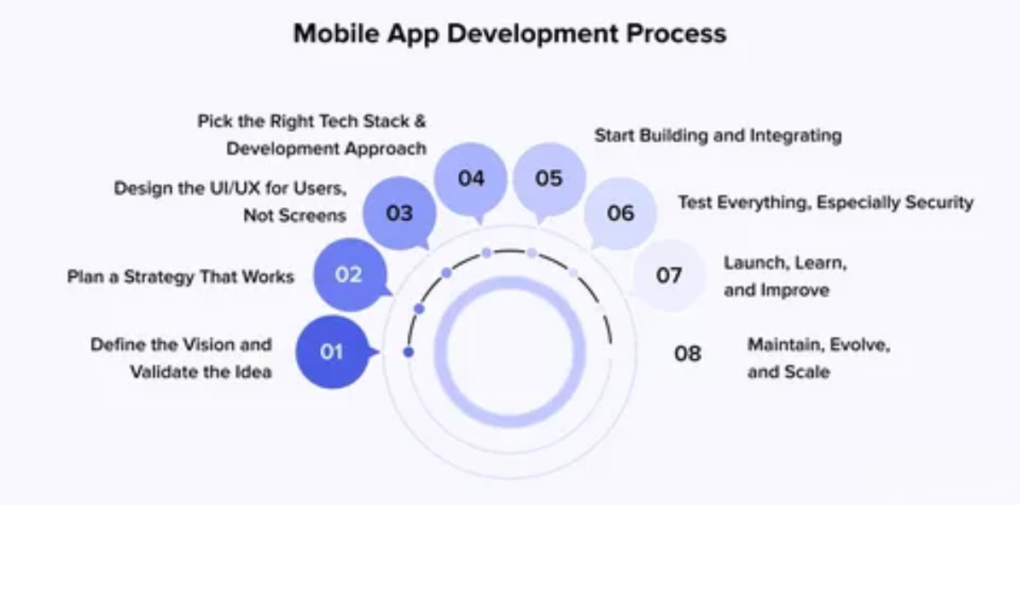
You now have a complete, practical roadmap for mobile app development solutions. It’s not magic just eight clear steps done in the right order.
At Hivenexis we love helping businesses like yours make this journey smoother. Whether you need custom mobile app development, healthcare app development services, fitness app development, ecommerce app development services, or simply advice as your app development consultant, our team is here.
Book a free 30-minute call no hard sell, just honest conversation about your project and what makes sense for you.
What are the best mobile app development solutions right now?
Cross-platform approaches usually give the best mix of speed, cost, and quality for most businesses.
How long does it take?
A basic version takes 3–6 months. More advanced apps can take 8–12 months.
Native or cross-platform?
Cross-platform wins for most companies today.
What’s the cost for custom mobile app development?
Mid-range projects usually land between $50k–$120k, but it depends on what you need.
Should I hire a company or try it myself?
For anything beyond a very simple tool, working with experienced companies that develop apps saves time and money in the long run.
What happens after launch?
Budget 15–20% of the original cost each year for updates and maintenance.