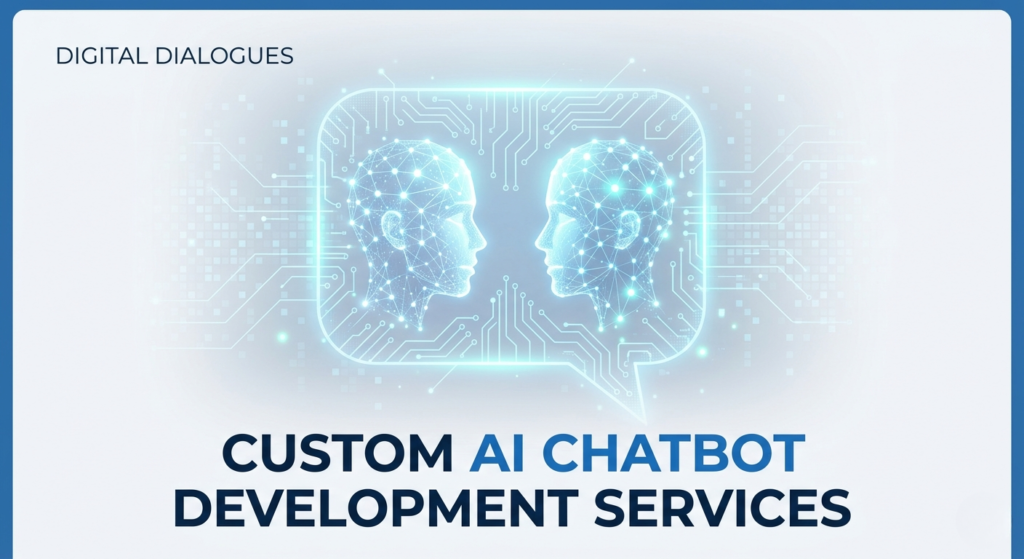
These days, almost every website you visit has some kind of chatbot sitting in the corner. Sometimes it helps, sometimes it’s just there. But behind the scenes, things have changed a lot. Chatbots aren’t just pre-written scripts anymore. They’ve become smarter, more responsive, and in some cases, surprisingly human-like. That’s mainly because businesses are moving toward custom AI chatbot development services instead of relying on basic plug-and-play tools. The difference might not look big at first glance, but in practice, it completely changes how customers experience your brand.
Why Chatbots Are Suddenly Everywhere
If you think about it, chatbots didn’t become popular because they were fancy. They became popular because people are tired of waiting. Nobody wants to sit in a support queue anymore for simple questions.
So businesses started using chatbots to fill that gap. At first, they were pretty basic. You ask something, they give a fixed reply. That’s it. But now they’ve become way more flexible. They can handle support, bookings, recommendations, even sales conversations in some cases.
And the interesting part is, users don’t always realize they’re talking to a bot anymore.
Custom Chatbots vs Regular Ones
There’s a big difference between something you buy off a shelf and something built specifically for you.
A custom AI chatbot isn’t just “installed” on your website. It’s designed around how your business actually works. That includes your tone, your customer flow, your products, and even how your team handles support.
For example, a law firm chatbot can’t sound casual or playful. But an online fashion store chatbot probably can. That’s the kind of detail custom development allows you to control.
Before Anything Else, Know What You Actually Want
A lot of chatbot projects go wrong right at the beginning because people skip this step.
They just say, “We need a chatbot,” without really thinking about what it should do. That’s where things get messy later.
You need to be clear. Is it supposed to reduce support tickets? Help generate leads? Guide users through your website? Or maybe handle all three?
Once that’s clear, everything else becomes a lot easier to figure out.
Where Chatbots Actually Make Sense
Not everything needs automation. That’s something people usually learn the hard way.
Chatbots work best in situations where users ask the same kind of questions repeatedly. Things like order tracking, appointment booking, product queries, or basic troubleshooting.
They’re also useful for guiding users who don’t know where to go on a website. Instead of searching through pages, they just ask and get directed instantly.
But trying to force a chatbot into every part of a business usually backfires.
Planning the Build
This stage is boring for most people, which is exactly why it gets skipped or rushed. But it actually decides how good your chatbot will be later.
You need to understand your users, how they talk, what they expect, and where they usually get stuck. Then you decide how the chatbot fits into that journey.
This is also where many businesses bring in teams like Hivenexis, because having someone who understands both the technical side and the business side makes the planning a lot smoother.
Designing Conversations That Don’t Feel Weird
Nobody likes talking to a robot that sounds like a robot.
A good chatbot conversation should feel light and natural. Not too long, not too formal, and definitely not overloaded with information.
It should guide users step by step instead of dumping everything at once. And it should know when to stop talking and just let the user respond.
This part is honestly more about psychology than technology.
What’s Happening Behind the Chat Window
On the surface, it just looks like a simple chat box. But underneath, there’s a lot going on.
The system is trying to understand what the user means, even if they don’t phrase it properly. It’s also learning from past conversations to improve responses over time.
And when connected properly, it can pull real data from your systems—like orders, customer details, or service records.
So it’s not just answering. It’s actually doing things in the background.
Building It, Connecting It, Launching It
Once everything is planned and designed, development starts. This is where the chatbot is actually built, trained, and tested.
After that comes integration, which is where things get more practical. The chatbot gets connected to your CRM, website, or internal systems so it can actually do useful work instead of just chatting.
Then it goes live. But honestly, that’s not the finish line. It’s more like the first real test.
The Part Nobody Talks About: Real-World Testing
No matter how well you plan things, real users will always surprise you.
They’ll ask things you didn’t expect. They’ll phrase questions in weird ways. Sometimes they’ll confuse the chatbot completely.
That’s normal.
So after launch, you watch how people interact with it, fix weak spots, retrain it, and slowly improve it. That cycle never really ends.
Cost vs Value
Yes, custom chatbots cost more upfront. That’s true.
But comparing them to basic chatbot tools isn’t really fair. A basic tool gives you limited control. A custom one actually grows with your business.
Over time, it can reduce support workload, improve conversions, and save a lot of manual effort. So the real question isn’t “how much does it cost,” but “what does it save or improve for you?”
Choosing the Right People to Build It
This is probably one of the most important decisions in the whole process.
A chatbot isn’t just a technical product. It’s a mix of design, behavior, data, and user experience.
Good development teams don’t just code it and leave. They actually think about how people will use it in real life and adjust accordingly. That’s why working with experienced teams matters more than most people realize.
Challenges You’ll Run Into
Things won’t be perfect. The chatbot might misunderstand users. Integrations might take longer than expected. Conversations might feel awkward at first.
That doesn’t mean something is wrong. It just means the system is still learning and needs adjustments.
Most good chatbots today went through multiple rounds of improvement before becoming reliable.
Where This Is Heading Next
Chatbots are getting more human-like every year. With generative AI, conversations feel less scripted. Voice-based interactions are becoming normal too.
At some point, the line between chatbot and digital assistant is going to get pretty blurry.
They won’t just respond anymore, they’ll start predicting what users need.
Final Thoughts
A chatbot only works well when it’s built with a clear purpose. If it’s rushed, it becomes just another ignored widget on a website.
But when it’s done properly, it quietly becomes one of the most useful parts of a business.
That’s really what custom AI chatbot development is about not just automation, but making digital interactions feel smoother, faster, and a bit more human.
Do I really need a custom chatbot?
If you want flexibility and long-term growth, yes. Otherwise a basic one might be enough for very simple use cases.
How long does it take to build one?
It depends, but usually a few weeks to a couple of months.
Can it fully replace human support?
Not completely. It handles repetitive stuff, but humans are still needed for complex cases.
Does it keep improving over time?
Yes, especially if it’s built with learning systems and updated regularly.