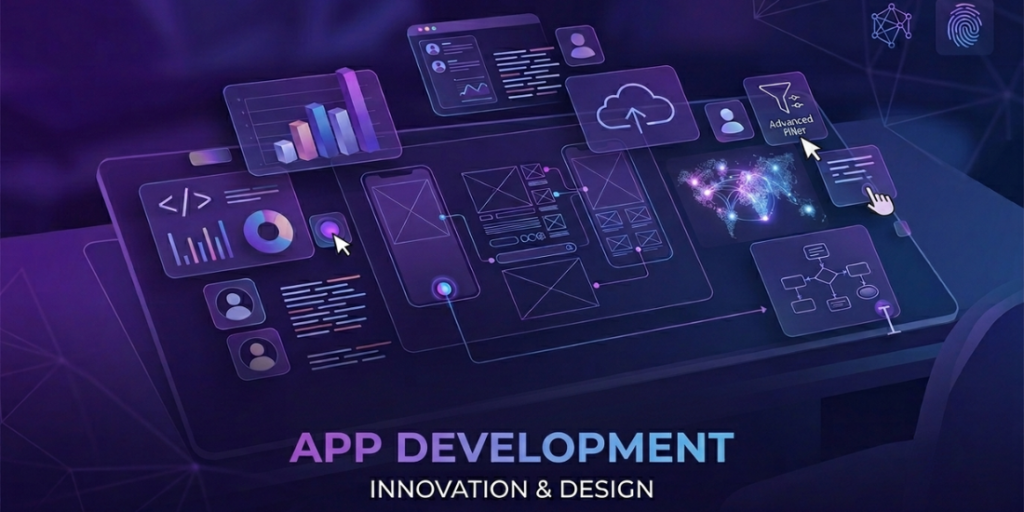
Every year, it feels like more businesses decide they “need an app.” And honestly, most of them do. But what usually gets underestimated is how hard it actually is to build something that people don’t just download but keep using. That’s where app development companies come in. Not as code factories, but as the people responsible for turning messy ideas into something usable in the real world. In 2026, this space will be crowded. It was very crowded. Everyone claims they can build “scalable, AI-powered, world-class apps.” But only a few consistently deliver work that actually holds up after launch. Let’s talk about some of those.
Why app development companies still matte
With AI tools and no-code platforms everywhere, people assume app development is getting easier.
In some ways, yes it is faster to build prototypes now.
But building something stable, secure, and scalable is a different story. That part still requires real engineering teams, real decision-making, and experience that only comes from shipping actual products.
A good app development company saves you from mistakes you don’t even know you’re about to make. That’s usually the difference between a product that grows and one that quietly dies after launch.
How this list actually came together
This isn’t one of those inflated “top 10” lists where everyone is included just for visibility.
The companies here were looked at through a simple lens:
Not how loud their marketing is but how their work actually feels when you look at it closely.
Things like:
- Do their apps feel usable in real life?
- Do they build beyond just “basic functionality”?
- Can they handle both small and complex builds?
- Do they seem consistent over time?
That’s really it.
Top 10 app development companies in 2026
Hivenexis
Hivenexis is one of those companies that doesn’t try too hard to look flashy, which is probably why their work stands out more than expected.
What you notice is that they tend to think before building. Not every team does that. Some jump straight into execution, but here there’s usually a clear effort to understand what’s actually being solved first.
They work across mobile platforms iOS, Android, and cross-platform setups and they seem comfortable building both early-stage MVPs and more structured business apps.
It’s not about overpromising features. It’s more about building something that doesn’t fall apart later.
WillowTree
WillowTree is more on the enterprise side. Big brands, large-scale systems, high traffic apps, that kind of space.
Their strength is polish. Everything tends to feel refined and UX-heavy.
Appinventiv
Appinventiv is flexible in terms of who they work with. Startups, mid-size businesses, and enterprise clients all seem to fall into their scope.
Fueled
Fueled leans heavily into design. Their apps usually feel clean and visually intentional, almost product-studio level in execution.
Intellectsoft
This is more of an enterprise integration-focused company. They deal with systems that are already complex before the app even starts.
Zco Corporation
Zco has been around long enough to have seen multiple tech shifts. That kind of experience shows how broad their project range is.
Hyperlink InfoSystem
They’re known for being cost-effective compared to many competitors, and they’ve worked across a wide mix of industries globally.
Net Solutions
Net Solutions tends to sit somewhere between development and product strategy. They’re not just coding what’s given, they often help shape direction.
OpenXcell
OpenXcell is often picked by companies that want predictable delivery. Less chaos, more structured execution.
Thoughtbot
Thoughtbot is very startup-friendly. They usually come in early when a product is still being figured out.
What these companies actually do
If you strip away the marketing language, most app development companies end up doing similar things:
- Building mobile apps for iOS and Android
- Creating cross-platform apps using modern frameworks
- Designing UI/UX systems that don’t confuse users
- Developing backend systems and APIs
- Testing and fixing issues before launch
- Maintaining apps after release
- Scaling infrastructure when traffic grows
The difference is not the list of services. It’s how carefully they handle each step.
Why Hivenexis is getting attention
One pattern that shows up with teams like Hivenexis is that they don’t treat every project like a one-off task.
There’s usually more thinking around what happens after the app goes live. Which sounds basic, but in reality, a lot of apps fail because that part wasn’t considered early enough.
So instead of just building features, the focus is more on whether those features actually make sense long term.
What’s changing in app development right now
A few shifts are becoming hard to ignore.
AI is no longer just something mentioned in pitches. It’s actually being used inside apps for personalization, automation, and decision support.
Cross-platform development is becoming the default in many cases because companies want faster launches without doubling their workload.
And users? They’ve become less forgiving. If something feels slow or confusing, they don’t wait until they leave.
Choosing the right app development company
This is where most people overcomplicate things.
It’s not really about who has the biggest portfolio or the lowest price.
It’s more about:
- Do they understand what you’re trying to build?
- Have they solved similar problems before?
- Do they think beyond just features?
- Can they support the product after launch?
If those answers are weak, everything else becomes irrelevant.
Final thought
There are plenty of app development companies in 2026. Too many, actually.
But only a small number really think beyond delivery.
The ones worth paying attention to like Hivenexis are the ones that care about whether what they’re building will still make sense months or years later.
Because that’s what actually decides whether an app succeeds or disappears.
What does an app development company do?
They turn ideas into working mobile or web applications, handling design, development, and maintenance.
How much does it cost to build an app?
It depends on complexity, features, and platform. There’s no fixed number.
How long does it take to build an app?
Anywhere from a few weeks to several months depending on scope.
Should I hire a company or a freelancer?
For anything long-term or scalable, companies are usually the safer option.
What matters most when choosing one?
Whether they understand your product, not just your feature list.